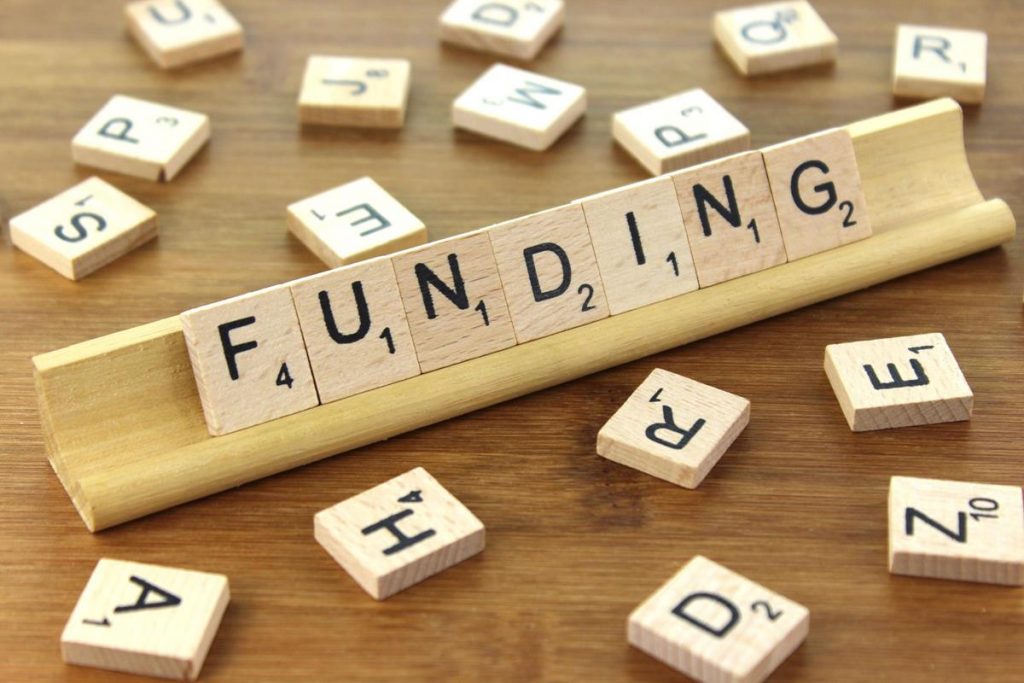
Spread the Word is pleased that our popular free online workshops all about applying for Arts Council England funding are back and open for bookings. The workshops cover two Arts Council England funding streams; Developing Your Creative Practice (DYCP) and National Lottery Project Grants (NLPG). The workshops take place online and are free to attend. The sessions are tailored to writers in London and are not open to artists working only in other art forms, or writers not living in London. Each workshop will be BSL interpreted.
These workshops will:
-
Give you an insight into the purpose of the grants
-
Help you think through your project
-
Take you through key stages of the application process and application form
-
Look at what makes a strong application
-
Provide opportunities for you to ask questions about your own proposal
Led by Ruth Harrison, director of Spread the Word, and freelance literature producer Tom MacAndrew, the workshops will talk you through the different questions in the application forms to help you think about how you can respond to them. They’ll give examples of what sort of projects have previously been funded and how Spread the Word has supported writers to achieve funding.
Please read through all the Arts Council’s or guidance beforehand, so that you are reasonably sure that what you have in mind is suitable for the relevant funding stream.
We want to make sure that the funding sessions are open to as many people as possible. Due to the limited number of places available for the DYCP and NLPG workshops, please only sign up for the session which is most suitable for the project you are planning. We will be running both sessions again in Autumn 2024. The workshops will not be recorded.
Eligibility
We anticipate that demand will be high for these workshops so please only book a place if you are committed to attending. They are open to writers of any literary form including playwriting and graphic novels. Please note, these sessions are specifically tailored to writers in London, and are not open to artists working in other media or writers living outside London.
More information and book now
National Lottery Project Grants application workshop Monday 3 June 2024, 7 – 9pm, BSL interpreted. There will be a break during the workshop. Book here: www.eventbrite.co.uk/e/arts-council-england-national-lottery-project-grants-workshop-tickets-880220793087
Developing Your Creative Practice workshop Monday 10 June 2024, 7 – 9.30pm, BSL interpreted. Book here: www.eventbrite.co.uk/e/arts-council-england-developing-your-creative-practice-fund-workshop-tickets-880181776387
Published: 9 April 2024
class="post-65504 post type-post status-publish format-standard has-post-thumbnail hentry category-opportunities"The Basics Course is open for booking!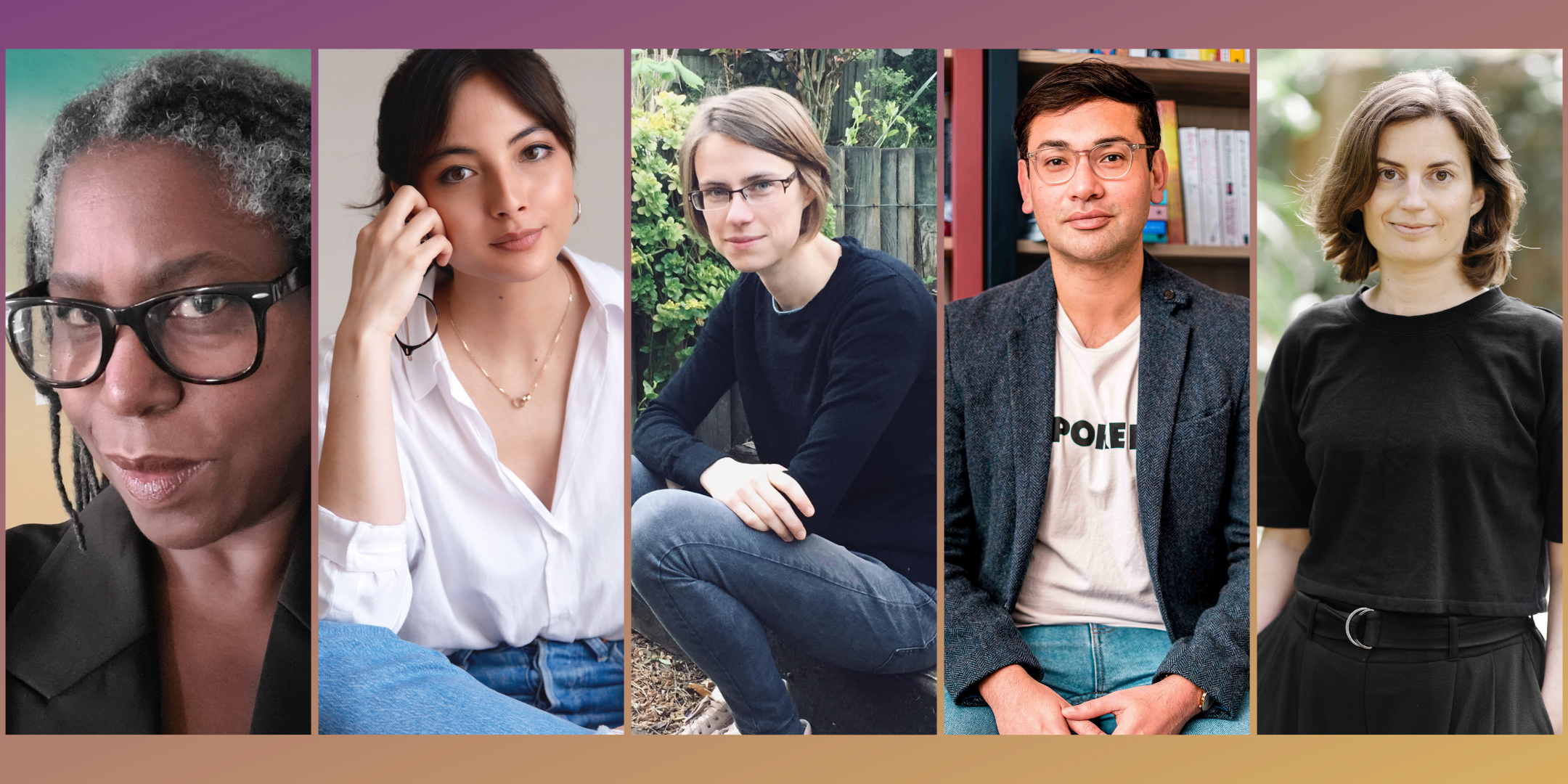
Spread the Word is thrilled to launch The Basics Course, a brand-new series of free online workshops for writers who have just started or are planning to write a full-length fiction novel.
The Basics is a course designed for early-stage writers looking to make their first steps to write a novel. Spread over five weeks, the course will be run by four award-winning debut novelists and an experienced editor. Each session will run on Zoom and will standalone so you don’t need to sign up to each one to take part. They will also be recorded so you can catch up.
This course will take you through the basics of putting together a full-length fiction novel, from developing your ideas, to editing your draft – there’s something for every writer looking to make a start on their novel.
The Basics Course dates and writers
 Developing Characters with Pam Williams
Thursday 23 May, 6.30pm-8.30pm
More info and book here:
https://www.spreadtheword.org.uk/events/developing-characters-with-pam-williams/
 Developing an Idea with Cecile Pin
Wednesday 29 May, 6.30pm-8.30pm
More info and book here: https://www.spreadtheword.org.uk/events/developing-an-idea-with-cecile-pin/
 Plot and Structure with Han Smith
Wednesday 5 June, 6.30pm-8.30pm
More info and book here: https://www.spreadtheword.org.uk/events/plot-and-structure-with-han-smith/
 Voice with Santanu Bhattacharya
Wednesday 12 June, 6.30pm-8.30pm
More info and book here: https://www.spreadtheword.org.uk/events/voice-with-santanu-bhattacharya/
 Self-Editing with Ana Fletcher
Wednesday 19 June, 6.30pm-8.30pm
More info and book here: https://www.spreadtheword.org.uk/events/self-editing-with-ana-fletcher/
Access
If you have any questions relating to access or access requests, please contact the team on [email protected] and we will work to meet your access needs.
Published: 9 April 2024
class="post-64955 post type-post status-publish format-standard has-post-thumbnail hentry category-news"Read the 2024 Nature Nurtures Anthology & Watch the Nature Nurtures Short Films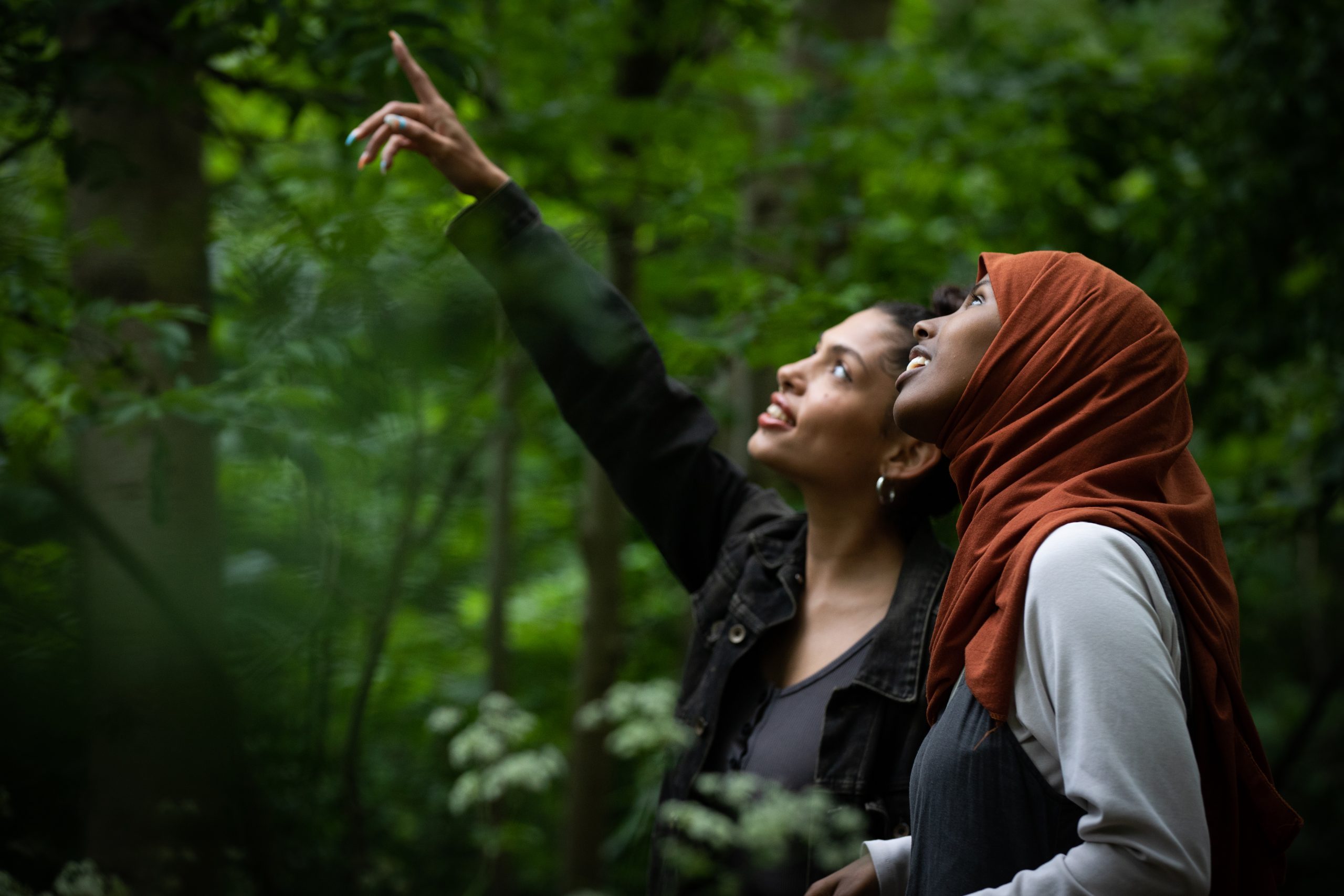
Watch the Nature Nurtures Short Films created by young people who took part on the project:
Nature Nurtures is a two-year project led by London Wildlife Trust in partnership with us at Spread the Word, Black Girls Hike CIC and London Youth. Since summer 2022, the project has offered lots of free creative and conservation opportunities for young people aged 16 – 25 in London, led by leading & award-winning writers and artists.
As part of the project, young people worked with filmmaker Mmloki Chrystie to create short film poems across different natural spaces and reserves in London, featuring some of their writing. Young people were also invited to contribute writing, photography and other creative expressions inspired by their experiences in nature and the wildlife of London to the 2024 Nature Nurtures anthology.
Closing this chapter of the Nature Nurtures project, the film poems and anthology celebrate the voices of creative young people in London and shines a dazzling light on their perspectives on the natural world. We hope you enjoy them.
Nature Nurtures is supported by funds awarded by the Department for Digital, Culture, Media and Sports, via the Volunteering Futures Fund distributed by Arts Council England.
Image (C) Eleanor Church.
Published: Monday 25 March 2024
class="post-64664 post type-post status-publish format-standard has-post-thumbnail hentry category-news tag-121-feedback tag-announcement"Announcing the Winners of the LBA Literary Agency Feedback Opportunity 2024
In September 2023, we launched a submission feedback opportunity with LBA Literary Agency, which represents a range of bestselling and prizewinning authors of commercial and literary fiction, non-fiction and children’s fiction, to support talented new voices in romance fiction from writers from backgrounds underrepresented in publishing.
We were thrilled to receive a variety of wonderful submissions for this feedback opportunity. We are pleased to announce that the winners are: Alice Sanders, Katty Janneh, Lauryn Mwale, Reema Kausar Majid, and Sheila Padre who received feedback critique from literary agent Hannah Schofield on their projects.
Hannah says: “I’ve been an admirer of the work of Spread the Word for years, and as a Lewisham resident myself I feel passionate about local outreach, so I was delighted to be given the opportunity to partner with StW on our romance session and submission call-out. The team were wonderful in facilitating all the events, and having worked more closely with them, I am even more impressed with their commitment to widening access to publishing to people from all walks of life.
My client Anam Iqbal and I were able to demystify the submission process to agents and editors in our live session, and we both so enjoyed the questions and insights from the audience. I was also hugely impressed at the quality and diversity of the submissions we received during the call-out, which represented love stories of all types: queer, straight, historical, contemporary, tropey, and sweeping! It was truly hard to pick the finalists, but I hope that I was able to encourage the authors I spoke to in their writing journeys and empower them to keep going – the world needs their stories.”
Find out more about the selected writers and their work below…
 Alice Sanders is a writer and comedy performer. Originally from London, she now lives in the Scottish Highlands where there is more nature, but, sadly, less Vietnamese food. She has written for various media outlets including The Guardian, The Telegraph, and Vice. She enjoys writing humour pieces, such as ‘Dick Portraiture for Renaissance Gentlemen’, published by McSweeney’s. She also writes audio description for TV programmes and films such as ‘Bridesmaids’ and ‘Up’. An erstwhile member of various comedy improv teams across London, as well as writing sketches and bad poetry for the character she performs, Sebastian Frond. Sebastian Frond, however, thinks he is a very talented poet.
About Alice’s fiction project: Playing for the Other Team is a novel about, well, playing for the other team – ever thought of giving it a go? Fran has, so she joins a lesbian football team with the (not-so) secret agenda of sleeping with a woman. And finding love, of course. After her initiation into the Sapphic arts, Fran is drawn towards a romance that could blow the football team apart. She’s faced with a tough decision: will she choose the path of virtue or the path of excitement? Like a queer sliding doors, the timelines diverging from her decision, it explores sexuality, agency, and how the small choices you make add up to more than the sum of their parts.
Alice says: “The feedback from Hannah was invaluable. Having her expert eye on my manuscript without the significant costs of an editor was so helpful. She gave me several points to work on during the next edit of my book in order to improve it. She named some novels I could look at that were excellent examples of things I’m trying to do with my book. I’m grateful to have received her advice and I think my new draft has already improved because of her comments!“
Instagram and Twitter/ X: @wernerspenguin

Katty Janneh is a writer based in South East London. After spending too long ‘should-ing’ in her life, Katty started writing again just as the pandemonium kicked in. She wants to craft stories that centre women like her: older, dark-skinned women who find love later in life with her brand of humour and joy that she strives to live by.
About Katty’s project: Amina, get an Attitude is Katty’s first novel. A romance set in the present day between the UK and The Gambia. Amina is a late bloomer who experiences a horrible betrayal. As she tries to rebuild her relationship, a spanner hits the works leaving her with a dilemma. Does she continue to keep the peace by pleasing others or will she finally start pleasing herself?
Katty says: “The experience was nerve wracking but so, so valuable. It gave me a reality check on what is needed to bring Amina’s story to life. Teasing out the magic so people can feel it when they read the words. I’m excited to see how the story will end.”
Instagram: @kattyjanneh
 Lauryn Mwale has always been a reader, flying through countless Nancy Drew adventures and Enid Blyton series, devouring classic literature to prove a point and learn about the history of storytelling. She has always hoped to be brave enough to write and her very kind English teachers encouraged this dream. In 2022, she published a non-fiction book, The Shuri Effect: Bridging the gap for Young Black Women in STEM. It was inspired by her experiences studying Mathematics at university, where she was often the only or , if she was lucky, one of three Black students in her classes. The book was an outlet for her feelings of frustration and anguish as well as an opportunity to platform and celebrate the Black women that came before her. Currently, she is working on her first full-length fiction novel, Low-key Losing It. The Work-in-Progress was shortlisted for the 2023 Merky Books New Writers Prize and Bloomsbury Book Mentorship as well as the LBA x Spread the Work feedback opportunity.
About Lauryn’s project: Lowkey Losing It, opens in present day London with our protagonist, Sondi, fantasising about a stranger she’s eyeing on the bus. Sondi is not one to allow life to happen to her so when he drops his phone on the seat, she accepts this gift from the universe and rushes out to return it to him, hoping that her gallantry will be the beginning of a beautiful love story. Unfortunately, the universe was merely playing with her. Caller ID alerts her that this man is, in fact, very much not available and in a panic, she dashes off, phone still clasped in hand. Clearly, going-for-it romance-wise is not the answer and so begins her #thatgirl delusional summer. Sondi will be turning her energy inwards; developing a Pilates habit, trying things outside of her comfort zone, getting a new role at work, being more creative and going back to therapy. Above all, she will be ignoring all men, especially her effortlessly charming work bestie Andre. Through therapy, tears and living life for the memoirs, will Sondi learn how to maintain healthy boundaries and welcome surprises, all while appreciating the love that already surrounds her?
Lauryn says: “Hannah was such a massive help! She was generous with her energy and insights and left me filled with ideas about positioning my book when submitting for representation. We discussed genre and comparables, the energy of my opening scene and the hacks for writing the perfect elevator pitch. I’ve already applied her advice and received some interest for representation.”
 Reema Kausar Majid holds an MA in Creative Writing from Bath Spa and is a FAB Prize 2023 Highly Commended winner. She has been published in Amaliah under a pseudonym, is an alumna of the RCW summer workshop 2023 and is a member of Megaphone.
About Reema’s project: The Lonely Road is set in pre-partition 1940’s India and follows beautiful and headstrong Wafaa as she joins the independence movement while fending off marriage proposals. A family tragedy leads her to Ibrahim, a celebrated freedom fighter, with whom she falls in love. As colonial rule crumbles so does their marriage. Pulled apart by their opposing political visions and Wafaa’s desperation for a child, they must choose between love and loyalty.
Reema says: “The feedback I received from Hannah was invaluable in terms of industry insight and the guidance she offered on pitching effectively. From changing my novel’s title, to reducing the word count, revising the query letter and answering my questions, the whole session was incredibly useful. Having an award winning agent compliment my writing style has been a huge boost and propelled me to keep revising. Huge thanks to Spread the Word, the LBA Literary Agency and Hannah for this opportunity!”
Instagram: @reemakausar01
 Sheila Padre is based in South London. She worked in digital marketing before deciding to take the plunge, do a Creative Writing MA and resume working on her first novel. She has a BA in International Relations and Politics and an MA from Cardiff University and Royal Holloway, respectively. Her literary work tends to explore emotional trauma in character-driven narratives and examine the human condition in times of turmoil. When she’s not writing, she’s re-watching Gilmore Girls, curled up with a glass of wine and her Westie, Penny.
About Sheila’s project Purple-Lipped Bookworm: Marlowe Balbuena is the most cynical, angry 25-year-old you’ll ever encounter, but grief has a way of undoing everyone. In the past, Marlowe’s adolescence in a Southwest London council estate is a playground of innocence and friendship that grows bleaker with the commonplace hyper-sexualisation of young women and loving a broken boy who can’t love her back. She grows depressed, and her coping mechanisms grow reckless. In the present, 25-year-old Marlowe has just lost her surrogate grandmother but refuses to attend the funeral. Greif-stricken, she meets Jude—a charming paramedic, at a housewarming, but she’s still harbouring severe trust issues from the last time she was in love. Still, she comes to learn the gift of art and literature as a medium of self-expression that can help ease the turmoil of depression and trauma.
Sheila says: “Hannah Schofield was absolutely lovely and provided invaluable guidance regarding what worked well and areas of improvement, not only for my writing but also for the synopsis and query letter. She answered all my questions thoughtfully and suggested where I should position my novel within the market, which sounds simple, but in the thick of writing, it is tricky to zoom out and select authors to cite as comps to better signpost your work in such a vast and varied market. The feedback reinvigorated my determination to keep writing and finish my first novel!”
Instagram: Sheila_padre
Spread the Word will open for its next 1-2-1 feedback opportunity in May 2024.
Published: 22 March 2024
class="post-64781 post type-post status-publish format-standard has-post-thumbnail hentry category-opportunities"Teach with Us: Developing Tutors Programme
Teach with Us: Developing Tutors Programme
Spread the Word is expanding its Developing Tutors programme to offer London-based writers a paid opportunity to teach their first creative writing workshop. Originally run for alumni of the London Writers Awards programme, Developing Tutors created a space for writers to develop their teaching skills with feedback and support from Spread the Word throughout the process. In 2024-25 we are looking to run up to 7 workshops starting in June 2024 with the final one in February 2025.
The programme is open to applications from London-based writers who meet the following criteria:
-
Aged 18+;
-
Full-time London resident;
-
Has had some creative work published, but not necessarily a full-length project;
-
Writing fiction or non-fiction prose;
-
Has not previously taught a creative writing workshop;
-
From one or more of these backgrounds underrepresented in UK publishing: Black, Asian and Global Majority; deaf and disabled, LGBTQIA+, from a lower socio-economic background, working class upbringing.
Tutors will be paid £250 for a two-hour creative writing workshop. This is inclusive of planning time and a follow up short evaluation. If successful, our goal is to offer further opportunities to the tutors.
How to Apply
In order to apply you will need to attend or watch a Zoom seminar run by Bobby Nayyar, Spread the Word’s programme manager, on Tuesday 16 April, 7pm-8.30pm.
The session will have BSL interpretation and will be recorded. Please sign up for it here:
Don’t worry if you cannot attend the live session. Please sign up anyway and we will send you a link to the recording. Please let us know if you have any access requirements.
Applications will open Tuesday 16 April and close on Tuesday 30 April. We aim to be in touch will all applicants by Monday 13 May. The Submittable links to apply are here:
You can apply in writing only here, or you can apply with audio or video here.
If you have any questions, please contact Bobby Nayyar on [email protected].
Published: 19 March 2024
class="post-64863 post type-post status-publish format-standard has-post-thumbnail hentry category-opportunities"We’re hiring: Programme and Communications Assistant
Spread the Word, London’s literature development agency, is recruiting an entry level, part-time role: Programme and Communications Assistant.
We are an arts charity and an Arts Council England National Portfolio Organisation. Founded in 1995 by novelist Bernardine Evaristo MBE and Ruth Borthwick (who went on to be Director of Arvon), we work to support, develop and advocate for London’s writers and to develop a thriving and diverse literature scene in London.
We create opportunities for storytellers, creatives and readers to change the conversations we have and reimagine the world we live in by: running inclusive creative writing programmes; offering practical ways for writers to get their work into the world; discovering Londoners who love words; and nurturing those who want to write, read and share stories.
Programme and Communications Assistant
We are looking for an enthusiastic Programme and Communications Assistant to provide vital administrative support across our programme of activity as well as working closely with the Communications and Impact Manager to support Spread the Words communications in print and online.
This multifaceted position requires excellent organisational, time management, communication, and engagement skills. We’re looking for an enthusiastic person who is keen to develop their career in the arts and deepen their passion for literature, cultural democracy and supporting London’s writers.
Job description and person specification (PDF)
Job description and person specification (Word document)
Working with Spread the Word
This role is based at Spread the Word’s offices at the Albany in Deptford, London. We offer hybrid working – we currently work two/ three days at the office and the rest at home.
We’re looking for an enthusiastic person who is keen to develop their career in the arts and deepen their passion for literature, cultural democracy and supporting London’s writers. You will be able to demonstrate good practice and commitment to accessibility, equality, and inclusion, as well as a passion for engaging people with words and stories
Interviews
The interview panel for the Programme and Communications Assistant role is: Director Ruth Harrison and Programme Manager (writer development) Bobby Nayyar.
Both the first and second interviews will take place in person at Spread the Word’s office at the Albany, Douglas Way, London SE8 4AG. Travel expenses will be paid and reasonable adjustments will be made for applicants invited to interview.
How to apply
Key Dates:
- Job advertised from: Tuesday 19 March
- Deadline for applications: 10am, Wednesday 24 April
- Shortlist confirmed by: Wednesday 1 May
- Round one interviews: Wednesday 8 May
- Round two interviews: Wednesday 15 May
Please apply by completing the questions in the online application form and attaching the following items:
- A cover letter outlining how you meet the job description and person specification and why you would like the role (no longer than 2 sides A4);
- Your CV (no longer than 2 sides A4);
- Completed Equal Opportunities form. The form will be separated from your application on receipt. You can download it here.
We particularly welcome applications from people who are currently underrepresented in the literature and publishing industries. If you rarely see people like yourself in the arts, for any reason, we particularly encourage you to apply.
Apply for the role using our online application form.
Please note: You can preview the form and see all questions by following the link. Please only fill the form in once you have everything ready as it is not possible to save a draft and come back to it later.
The deadline for applications is 10am on Wednesday 24 April. Please note that late applications will not be considered.
Contact
If you are experiencing any issues with your application, please contact Ruth Harrison: [email protected]